EQUAZEN MASSAGE | info@equazenmassage.com |
Call us: 506-321-6432

Advanced Massage Therapy
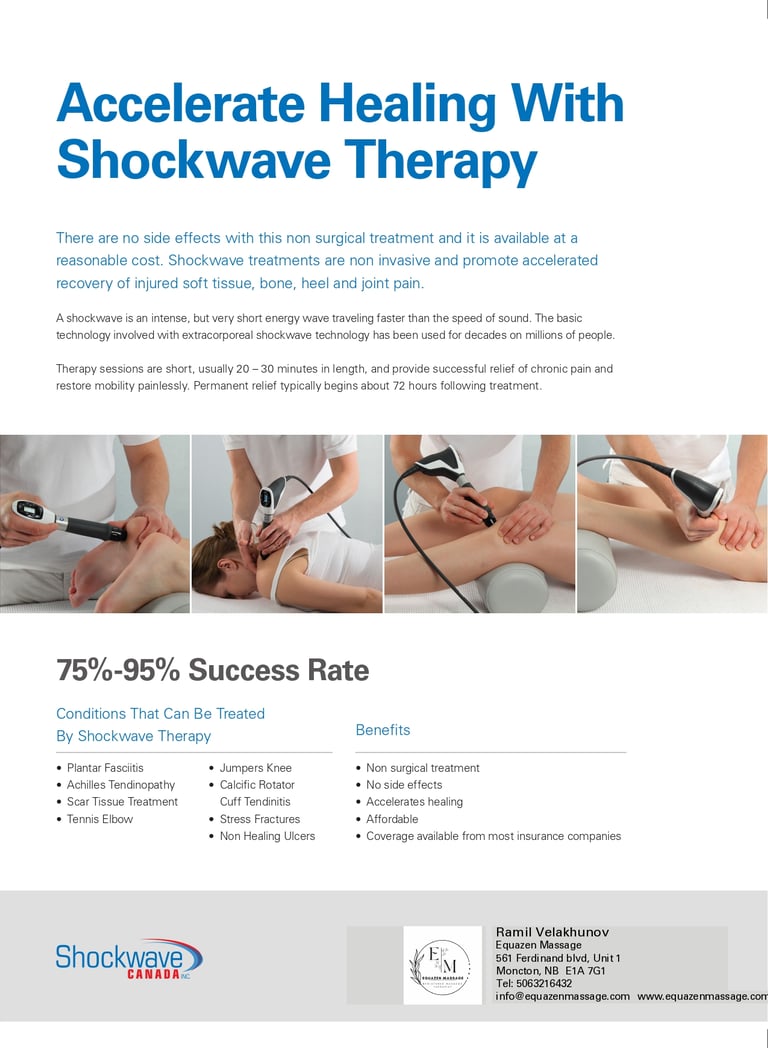
At EquaZen Massage Clinic, Advanced Massage Therapy combines hands-on massage techniques with targeted therapeutic approaches, including Shockwave Therapy when clinically appropriate, to support pain relief, improve mobility, and promote soft tissue recovery.
AVAILABLE NOW!
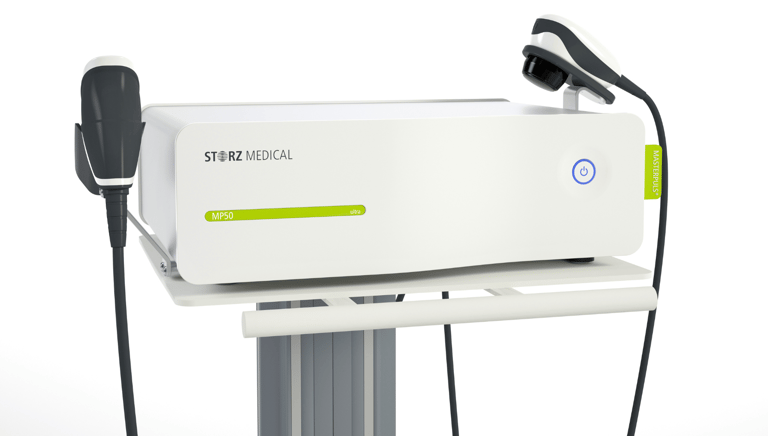
Shockwave Therapy
Advanced Massage Therapy is a personalized massage therapy session designed for clients who require a more focused and clinical approach to care. In addition to traditional massage techniques, Registered Massage Therapist may integrate specialized methods, such as Shockwave Therapy, to help address chronic pain, muscle tension, and soft tissue dysfunction more effectively.
You will expect during your session:
Assessment
Registered Massage Therapist will review your health history, assess movement and soft tissue function, and discuss your goals for treatment.
Treatment
Most of the session consists of hands-on massage therapy techniques. When appropriate, Shockwave Therapy may be integrated for a short portion of the session to support targeted tissue work.
Ongoing Evaluation
Your response to treatment is continuously monitored, and techniques are adjusted as needed to ensure safety, comfort, and effectiveness.
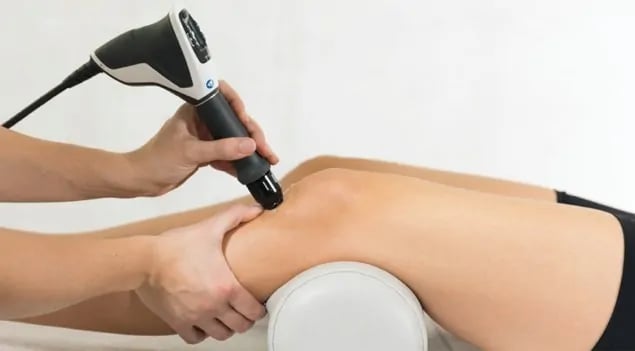
Advanced Massage Therapy (including Shockwave Therapy) may be beneficial for clients experiencing:
Chronic muscle tension and stiffness
Myofascial pain and trigger points
Tendon-related discomfort (such as Achilles or patellar tendon issues)
Plantar fasciitis–type symptoms
Shoulder, hip, knee, or elbow soft tissue pain
Limited range of motion due to soft tissue restrictions
Conditions that have not fully responded to standard massage therapy
FAQs
What is shockwave?
Shockwave therapy uses sound waves to stimulate healing in soft tissues.
Is it painful?
Most clients feel mild discomfort during treatment, but it’s usually well tolerated.
How many sessions needed?
Typically, 3 to 5 sessions spaced a week apart help reduce pain and improve mobility.
Who can benefit?
Anyone with soft tissue pain or mobility issues may find relief.
What conditions can be treated with radial shockwave therapy?
Radial shockwave therapy is commonly used for:
Plantar fasciitis, Achilles tendinopathy, Medial tibial stress syndrome (shin splints), Patellar tendinopathy, Tennis and golfer’s elbow, Shoulder tendinopathies, Frozen Shoulder, Calcific tendinitis (non-articular), Chronic muscle tightness and trigger points
How does it support healing?
Shockwave promotes blood flow and tissue regeneration, speeding recovery naturally.
What Is Advanced Massage Therapy?
Advanced Massage Therapy is a personalized massage therapy session designed for clients who require a more focused and clinical approach to care. In addition to traditional massage techniques, your Registered Massage Therapist may integrate specialized methods, such as shockwave therapy, to help address chronic pain, muscle tension, and soft tissue dysfunction more effectively.
What are the possible side effects?
Side effects are usually mild and temporary, and may include:
Local soreness or tenderness
Redness or mild swelling
Bruising or petechiae
Temporary increase in pain (24–48 hours)
Serious complications are rare when used appropriately.
What are the contraindications for radial shockwave therapy?
When will I notice results?
What should I avoid after treatment?
Absolute contraindications:
Pregnancy (over the treatment area), Active cancer or malignancy in the treatment area, Acute infection or inflammation, Blood clotting disorders or use of anticoagulants (relative – clinical judgment required), Open wounds or skin lesions, Areas with metal implants directly under the treatment site, Over growth plates in children
Relative contraindications:
Severe peripheral neuropathy, Recent corticosteroid injection (within 4–6 weeks), Severe osteoporosis, Sensory deficits affecting pain perception
Some clients notice improvement after the first session, while others experience gradual improvement over several weeks as tissue healing progresses. Optimal results often occur 4–8 weeks after completing treatment.
For 24–48 hours after treatment, it is recommended to:
Avoid high-impact or strenuous activities
Avoid ice and anti-inflammatory medications (NSAIDs), as inflammation is part of the healing process
Maintain light, pain-free movement